Keynote speakers
Adam Izdebski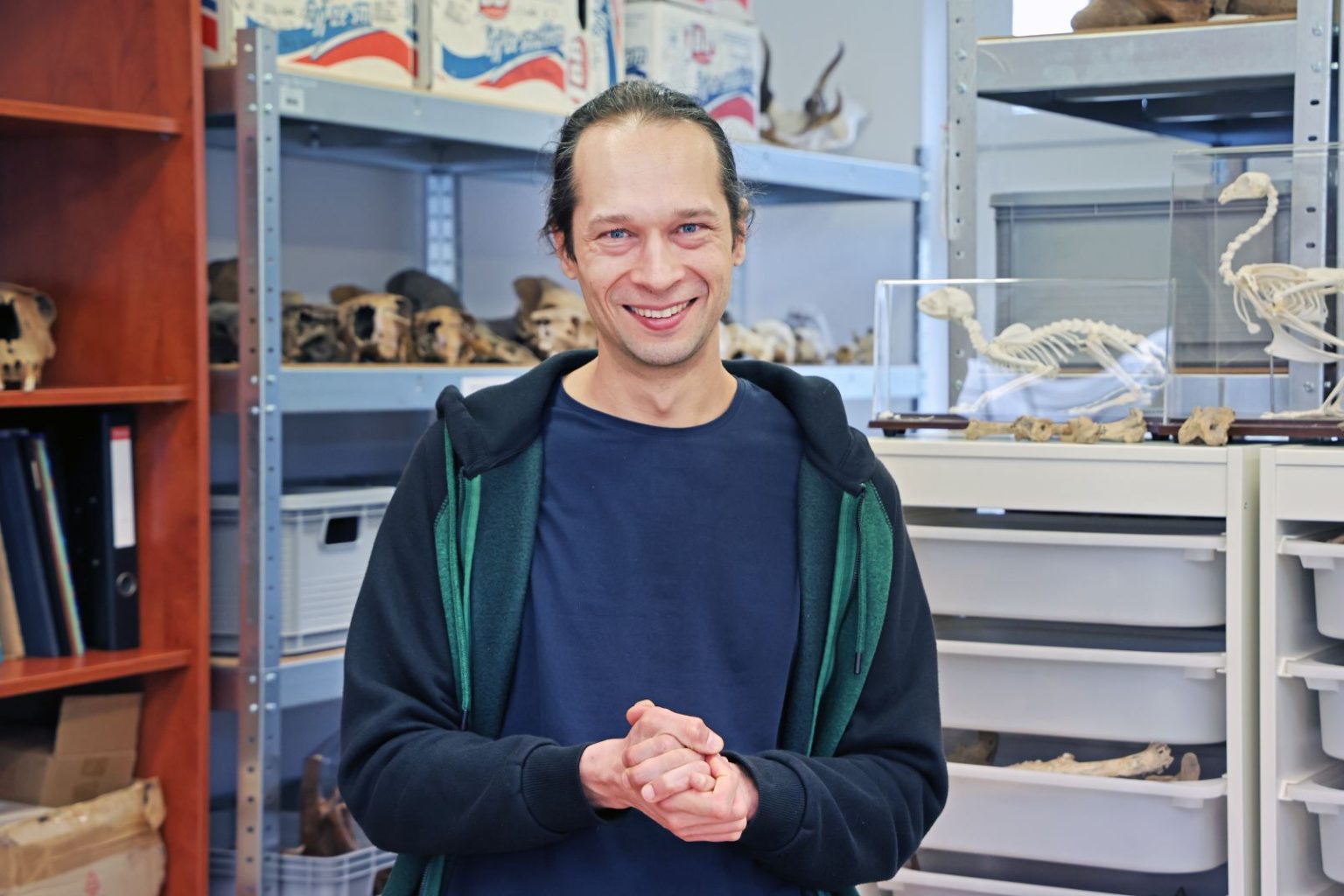
Adam Izdebski is interdisciplinary historian and professor of human ecology at the Nicolaus Copernicus University in Toruń, Poland. He is the corresponding Principal Investigator of the ERC Synergy Grant EUROpest, which studies late medieval and early modern epidemics. In 2018-2025, he was leading an independent research group in environmental history at the Max Planck Institute of Science of Human History / Geoanthropology in Jena, Germany. His research interests cover climate change, pandemics, biodiversity, and the interaction of economic development and ecological dynamics in the Late Holocene. He has been involved in several science for policy initiatives and since May 2025 he is a deputy chair of the Group of Chief Scientific Advisors to the European Commission.
Title of the paper: The aDNA revolution in historical research: an explosion of biology at the heart of the humanities
Abstract: For generations, history has been plagued by unanswered questions that scholars could only speculate about. What pathogens were behind the deadliest pandemics of the past? How big were the Germanic groups that migrated all across Europe and made the Roman Empire fall? Where did the Slavs come from? This list could go on for long. It seemed like there would never be a definite answer to any of these questions - but now there seems like there is. Thousands of genomes from ancient bones reconfigure how research is done in history, and their emergence sparks huge controversies over who has the right to determine and interpret the past. My talk will deal with this biological revolution in history - how it came about, how it is debated about, and how it creates spaces of hybridity between the humanities and the natural sciences.
Jan Jakub Surman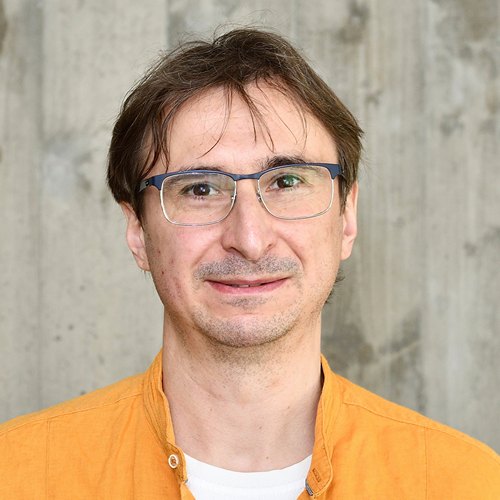
Jan Jakub Surman is a historian specializing in the intellectual and scientific history of Central and Eastern Europe working at the Masaryk Institute and Archives of the Czech Academy of Sciences, Prague. He earned his Ph.D. in History at the University of Vienna and has held fellowships in Erfurt, Moscow, Princeton, and Marburg. His research explores the intersections of science, language, and politics. He has published widely on multilingualism in academia, the history of positivism, and knowledge circulation.
Title of the paper: When Revolutions Fail. The Scientific-Technical Revolution (STR) and the Socialist Humanities
Abstract: Between the late 1950s and the early 1980s, the Scientific-Technical Revolution (STR) emerged as a prominent socialist discipline in the making, showcased at international congresses as a crucial field within the humanities of the future. Yet by the late 1980s, only a few remembered that it had ever existed, let alone worked within its framework. In my talk, I will discuss the unusual trajectory of STR by focusing on the Czechoslovak philosopher Radovan Richta (1924-1983), the internationally most recognized author on STR, whose career mirrors both the rise and decline of the field and the fate of the Prague Spring. Richta’s work on STR serves as a case study through which I examine several characteristics of scholarship under developed socialism in Central Europe: the emergence of socialist big humanities, the paradoxes of politicization, and the consequences of epistemic and social maneuvering between Soviet expectations and Western audiences.
Ewa Domańska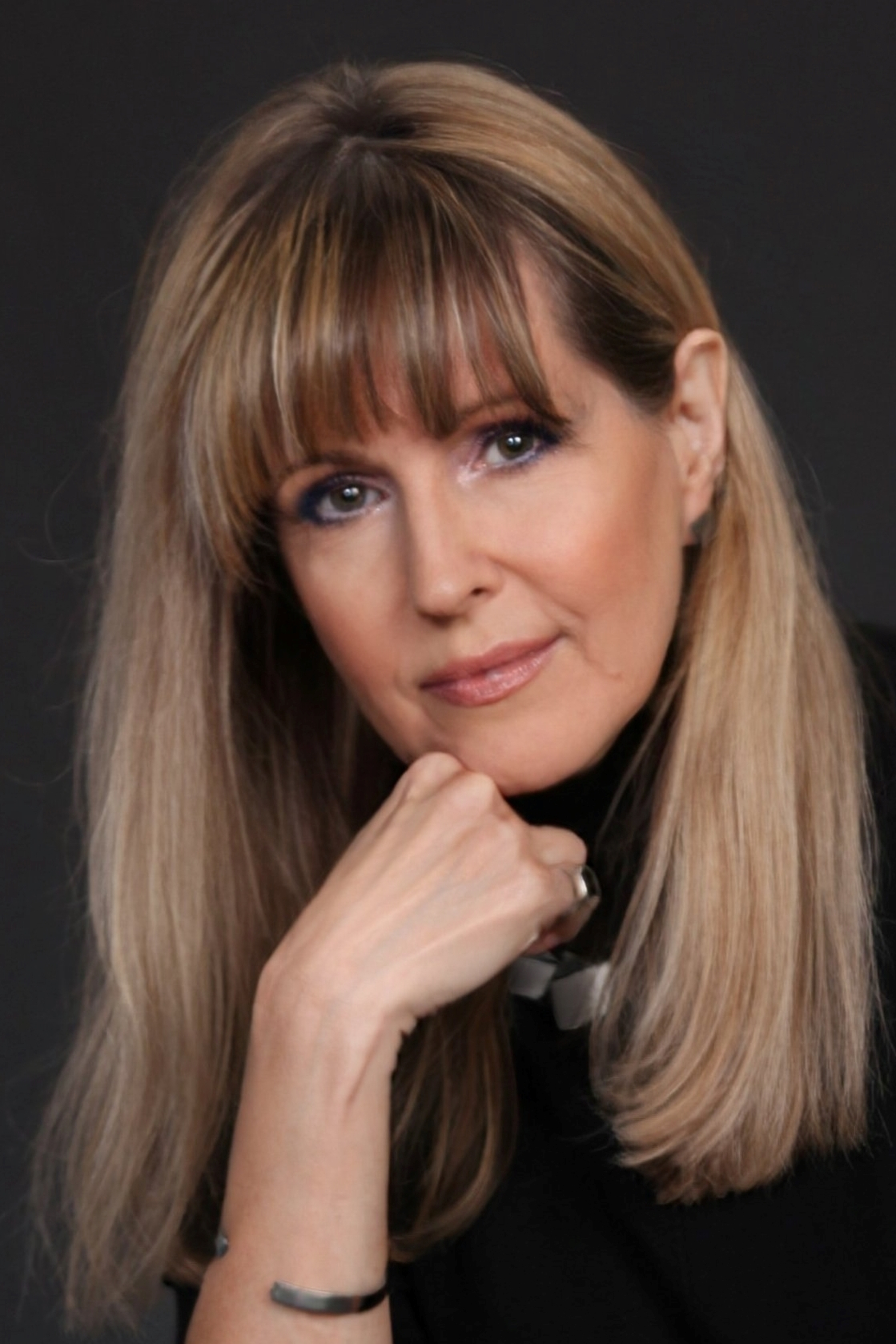
Ewa Domańska is Professor of Human Sciences at the Faculty of History, Adam Mickiewicz University in Poznań, Poland, and Visiting Professor at Stanford University (spring term). She is a member of Academia Europaea and the Polish Academy of Sciences. Her work focuses on the theory and history of historiography, with particular emphasis on emerging trends in the humanities, including post-anthropocentric and non-European approaches to the past. She has developed influential concepts and research projects, including affirmative humanities and necroheritage, and contributes to ongoing debates on future-oriented approaches to the past. Recent publications include: A História para além do humano [History Beyond the Human] (eds. Julio Bentivoglio and Taynna Marino, Rio de Janeiro: Fundação Getulio Vargas Press, 2024); Ewa Domańska and Krzysztof Brzechczyn, “Expanding the Boundaries of the Analytical Philosophy of History” (Journal of the Philosophy of History, vol. 19, no. 3, 2025); “Necroheritage” (Journal of Contemporary Archaeology, vol. 11, no. 2, 2024).
Title of the paper: Indigenous Humanities and the Reconfiguration of Knowledge over the Past Twenty-Five Years
Abstract: In this lecture, I argue that the humanities of the past decades have been undergoing uneven and contested reconfigurations, shaped, among other factors, by processes of decolonizing knowledge, ongoing struggles for epistemic justice, and responses to overlapping and persistent global crises that intensify pressures on existing systems of knowledge. The critique of the universalist claims of Western knowledge and its anthropocentric foundations—emerging both from within and from outside the Western academy—has contributed to the increasing visibility and influence of historically marginalized ways of knowing, including Indigenous and local knowledges. At the same time, these developments remain partial and asymmetrical, occurring more prominently at the level of discourse and theory than within institutional structures.
I approach Indigenous Humanities as a transdisciplinary and transcultural field of knowledge grounded in relational ontology, where humans, non-humans, and the land itself participate in knowledge building. I also examine selected trends in contemporary humanities, including critiques of anthropocentrism and Eurocentrism, the rise of public and socially engaged humanities, growing interest in knowledge building with non-humans, and participatory methods. I emphasize tensions, translations, and selective appropriations that structure these encounters and often conceal persistent asymmetries of power.
I propose to understand these changes as processes that may open up possibilities for coexistence and negotiation between different systems of knowledge, thereby foregrounding the plurality of ontologies—and, consequently, of knowledges and ways of knowing.